Start Close In

On how small steps, taken consistently, become something more


There’s a poem by David Whyte called “Start Close In”. You can read it in full here, which is what poems like this deserve, rather than to be borrowed in fragments. That said, the instruction in the title has stayed with me for years: begin with what is actually in front of you, not the grand leap, not the distant, dramatic version of the change you’ve been imagining.

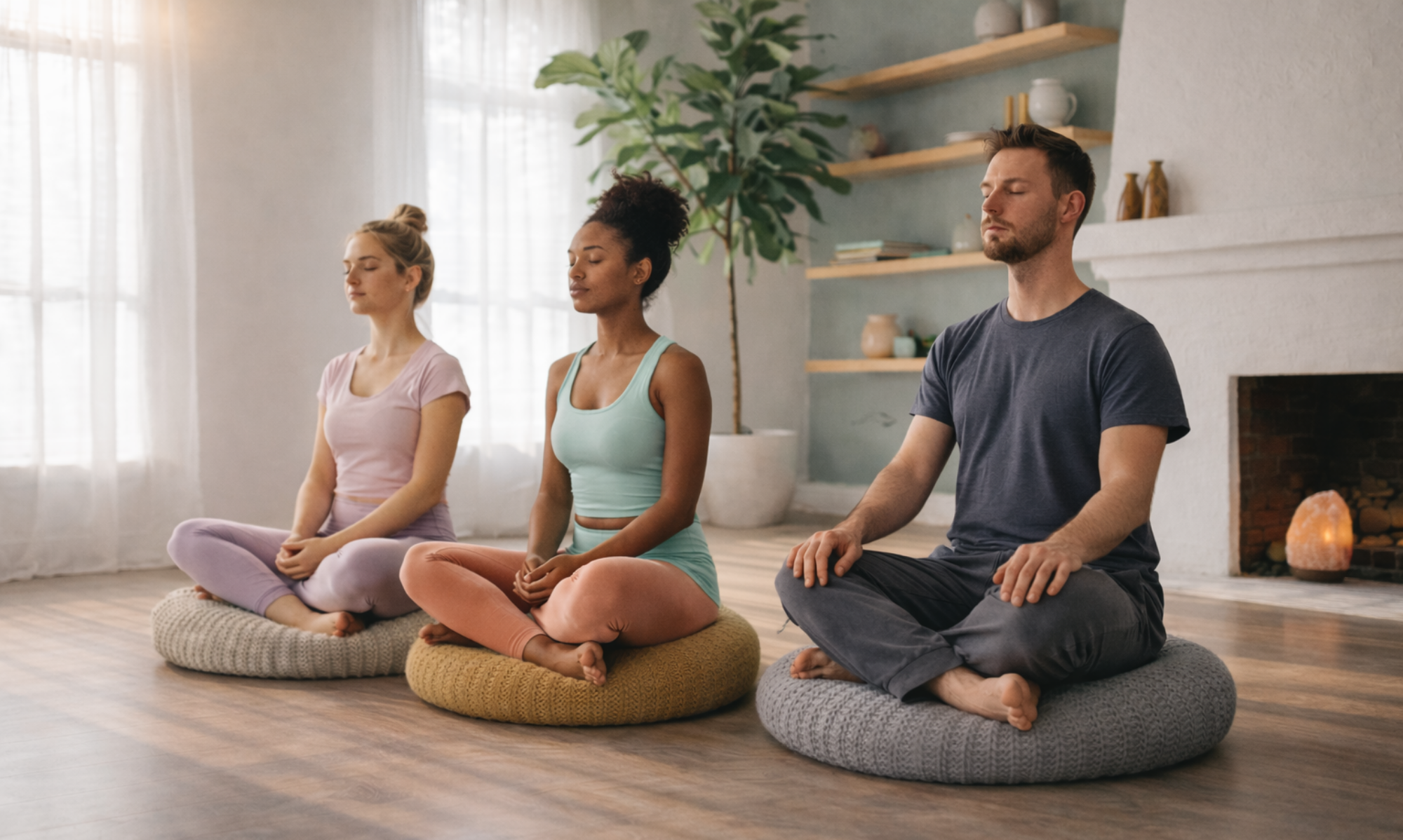
I’ve been thinking about it again recently because at the beginning of September I taught my first public yoga class. Ten people, a church hall in New Barnet, a Friday morning. From the outside it might have looked like a leap. It wasn’t. It was the next close step in a story that started well over ten years ago, and it’s taught me a lot about how something authentic gets built.


The Part That Took Ten Years

I fell in love with yoga during a Mindfulness-Based Stress Reduction course I did with a teacher called Norma Kirwan, but it was more than a decade before I ever thought about training to teach it. It sat alongside my meditation practice for years, not a separate pursuit so much as a different door into the same room. Movement as mindfulness in motion, the same nervous system settling, just reached by a different route. I never set out to become a yoga teacher, even after I had trained to be a mindfulness teacher. I just kept practising, kept turning up on the mat, and at some point, it started to feel natural to want to share the benefits of yoga with other people too.

That’s usually how the real transformation happens, I think. Not as a five-year plan announced to the world, but as a quiet accumulation that eventually becomes tangible. Signing up for the yoga teacher training wasn’t really the beginning. It was just the moment that beginning became a doorway I could hold open for others too.

I want to celebrate anyone whose practice, whatever it is, lives mostly on an app or in the carved-out moments of a busy day. It’s exactly how many pathways begin, mine included. I’ve had a daily solo mindfulness practice for a long time now. Alongside that, I have always found support in joining regular groups, retreats and opportunities to spend time with like-minded people. There’s a palpable energy to being in a group, an atmosphere created simply by people showing up and practising alongside each other and this can inspire us to keep showing up, to keep taking the next step. These are the gifts that practising with others gives you, as well as a fixed day, a fixed time and other people who notice when you’re not there. It can be much easier to commit to a session with others compared with a solo sit you were only ever answerable to yourself for. The structure is often what makes the practice actually happen, week after week, for long enough that it compounds into something meaningful.


What It Actually Felt Like

Teaching my first yoga class wasn’t effortless. I’d hoped to arrive early and run through my lesson plan one more time, and instead found myself teaching a room of ten people, five I knew and five I didn’t, having barely had a moment to settle myself first. At one point, I forgot to specify which side to stretch first, so half the room ended up doing something different to the other half, and it was only afterwards I realised I left out some of the asanas I had intended to include altogether.

Despite these challenges, the session still landed. Someone told me afterwards she felt so relaxed during the closing relaxation that she nearly fell asleep. Another participant said I seemed calm, confident and knowledgeable, which surprised me, because from the inside it had felt far messier than that. Thankfully, every week since has felt a little more natural.


The Learning Isn’t Finished

My yoga teacher training finishes in November but I don’t think that milestone will change how ready I feel nearly as much as I once assumed it would. What’s really made the difference has been close to what I wrote about in a previous post: honouring the step that’s actually in front of you. The teacher training may be coming to an end, but in many ways the learning is just beginning. That’s what practice looks like.

This, I think, is the whole path: no leap, just small steps, taken consistently. They quietly add up to what turns out to make a real difference. Not just my journey from student to teacher. But also from someone who used to carry the day’s stress home with her to someone who’s now more easily able to let go of rumination and genuinely appreciate life’s small joys. The change has been so gradual that it can be hard to notice, but when I look back I can see a true transformation. If this is possible for me, it’s possible for you too. It’s the cumulative effect of consistently turning up for practice again and again.


Do you find it easier to practice alongside others? If so, both of the regular sessions I teach offer exactly that โ€” which one feels like the most natural next step for you?

I now teach Friday Morning Yoga, 9:30โ€“10:30am at St John’s Church Hall in New Barnet, all levels welcome including complete beginners, if movement feels like your way. You can find out more and book here.

My Thursday evening drop-in meditation continues too, online or in person in Barnet, 6.15pm, no experience needed, if being still is more your rhythm. You can book through North London Yoga.

Whatever door you choose matters less than simply taking the next step and walking through one.


Ruth McDonald is a BAMBA-registered mindfulness teacher and yoga teacher (BWY, training completing November 2026). She teaches a weekly Thursday evening meditation drop-in and Friday morning yoga, and works with individuals and groups in London and online.

How Mindfulness Helps Parents Respond Rather Than React

A mother sitting drinking tea

What I’m learning from teaching mindfulness to families


One of the most powerful moments in teaching mindfulness is when a parent realises they can pause, right in the middle of a difficult conversation with their teen, and completely change the energy in the room.

I’m currently teaching an 8-week mindfulness course as part of a nationally funded research trial exploring whether mindfulness can support young people experiencing depression and anxiety. I work with parents’ and carers’ groups, helping them learn to bring ancient practices into modern family life.

Depression and anxiety can be extremely challenging for young people and their families. Offering mindfulness as a practical way to navigate the ups and downs of life feels like such a gift, and it’s inspiring to see how evidence-based approaches can blend with ancient wisdom to truly make a difference.

While the trial focuses on depression and anxiety, the principles we’re exploring are universal. Whether you’re parenting a teen with depression or anxiety or simply navigating everyday stress and overwhelm, the core skill is the same: learning to pause, breathe, and respond with awareness rather than react automatically.


Learning to Pause

The young people who attend the programme already know that life can be hard and have tried one or more treatments that haven’t worked. They’re looking for something new, something that helps them meet life’s challenges differently.

The course doesn’t remove their stress, but it offers new perspectives, tools, and techniques to help them pause, breathe, and respond with awareness rather than react automatically.

Parents and carers learn similar skills in a parallel group that runs alongside the young people’s sessions, helping create a shared language and consistent approach at home. Everyone leaves with new skills, and often a new sense of hope.


What We’re Learning

During the course, we explore both the benefits and barriers of practicing mindfulness in daily life. We quickly discover that the point of mindfulness isn’t simply to relax (although that can be a lovely side effect), it’s to work skillfully with what life brings, especially when it’s difficult.

Cultivating the ability to pause helps us meet stress with more wisdom and compassion. One parent recently shared how the Three-Step Breathing Space helped them when their teen was distressed. Instead of reacting out of fear and trying to “fix” things, they paused, breathed, and listened. That small shift changed the whole energy of the conversation and the household.


Try It Now: The Three-Step Breathing Space

You can try this simple practice anytime you feel overwhelmed. It only takes a few minutes and can be done with eyes open or closed.

Step One: Become Aware
Notice what’s happening right now in your body, mind, and emotions.

Step Two: Focus on the Breath
Bring your attention to your breathing. Stay here for a few moments.

Step Three: Expand Awareness
Gently widen your focus to include your body, surroundings, and the moment you’re in. Return to your day with a new sense of perspective.

Want more practices like this one? Download my free guide โ€” Simple Ways to Find Calm โ€” simple mindfulness practices for everyday moments.


Taking It Further

This is just one of the many practices we explore during 8-week mindfulness programmes. The course structure gives participants time and space for deep learning and habit formation, mindfulness gradually becomes woven into the fabric of daily life, offering support when it’s needed most.

It’s inspiring to see the everyday transformations that unfold when ancient wisdom meets modern challenges. Mindfulness taught in an accessible, evidence-informed way empowers people to meet life’s stresses with greater calm, clarity, and compassion.

If you’re curious about bringing these practices into your own life:

Join me for a weekly drop-in meditation on Thursday evenings (6:15pm at St. Mark’s Hall, Barnet or online), it’s ยฃ5 and everyone’s welcome. I also offer one-to-one sessions for more personalised support.

Get in touch at ruth@pathwaytocalm.com.


Ruth McDonald is a BAMBA-registered mindfulness teacher. She teaches a weekly drop-in session and works with individuals and groups in London and online.

One to One Mindfulness Support

One-to-One Mindfulness Support

Personalised mindfulness sessions for stress and overwhelm

One-to-one mindfulness sessions offer personalised, gentle support if youโ€™re experiencing ongoing stress, anxiety, or feeling overwhelmed. These sessions provide a calm, confidential space to slow down and explore what might support greater balance and steadiness in daily life.

Sessions are tailored to your needs and paced carefully, using practical mindfulness approaches that are choice-led and supportive rather than directive.


How one-to-one mindfulness can support you

One-to-one mindfulness support may be helpful if you are:

  • Living with ongoing stress or overwhelm
  • Experiencing anxiety or difficulty settling the mind
  • Seeking personalised mindfulness support rather than a group setting
  • Looking to reconnect with greater steadiness, ease, and moments of joy

No previous experience of mindfulness is required.


Practical details

When
Sessions are arranged at a time that works for you.

Where

  • Online
  • In person in Barnet

Cost
From ยฃ45 per session.


Next steps

If youโ€™d like to explore whether one-to-one mindfulness support is right for you, youโ€™re welcome to get in touch for a brief, confidential conversation.

โœ‰๏ธ ruth@pathwaytocalm.com

 ๐Ÿ“ž 07432 140 102

Mindfulness Teaching Supervision

If you’re a mindfulness teacher looking for reflective support in your practice, I also offer one-to-one supervision sessions. Whether you’re navigating the complexities of group teaching, working through questions that arise in your practice, or simply wanting a dedicated space to reflect, supervision can offer valuable perspective.

Get in touch to find out more โ†’ ruth@pathwaytocalm.com

Thursday Evening Drop In Meditation

A gentle space to pause and reset

If youโ€™re feeling overwhelmed, stretched thin, or simply longing for a regular pause, this weekly drop-in meditation offers a calm and supportive space to stop, breathe, and reconnect.

Each session is guided and accessible, with an emphasis on choice, kindness, and meeting yourself just as you are. We practise simple mindfulness and meditation exercises designed to support emotional balance, nervous-system regulation, and a greater sense of steadiness in everyday life.

Youโ€™re welcome whether youโ€™re completely new to mindfulness or returning to practice. Some people attend regularly; others drop in when they need extra support โ€” both are equally welcome.


What to expect

  • A gently guided mindfulness practice
  • Clear, invitational instructions with options throughout
  • Time to settle, practise, and rest
  • Optional space for gentle inquiry and reflection, shared only if and when it feels supportive
  • A calm, non-judgemental atmosphere

There is no pressure to share, perform, or โ€œget it rightโ€.


Practical details

When
Every Thursday, 6:15โ€“7:15pm

Where

  • Online via Zoom
  • In person at St Markโ€™s Church,
    56 Potters Road, Barnet, EN5 5HY

Cost
This is a donation-based session, offered to keep it accessible to all.

Pay what feels right: ยฃ5 or ยฃ10 donation


Is this session for me?

This drop-in may be particularly supportive if you:

  • Feel stressed, overwhelmed, or depleted
  • Are curious about mindfulness but unsure where to start
  • Want a steady, regular practice without long-term commitment
  • Value gentleness, choice, and a slower pace

No previous experience is needed.


You can join either in person or online.

 Click Here to Book Your Spot

Welcome to Pathway to Calm

I offer practical mindfulness support for stress and overwhelm, helping people reconnect with steadiness, ease, and moments of joy.

Join a gentle weekly Thursday evening meditation session online or in person in Barnet where we explore ways to bring mindfulness into daily life. Whether you’re new to meditation or returning to practice, you’d be warmly welcomed.

I also run an unhurried Friday morning yoga class in New Barnet, currently free to attend, combining movement, breath, and mindful awareness for beginners, returning practitioners, and anyone looking for a new class to join.

If you’d like more personalised support, I offer one-to-one sessions โ€” tailored to where you are right now.

I also work with organisations, delivering evidence-based mindfulness programmes for workplaces, hospices and charities.


โœ‰๏ธ ruth@pathwaytocalm.com
๐Ÿ“ž 07432 140 102